
People open a practice’s website with a precise question, and often with a worry: a pain, a feverish child, a frightening quote. The visitor wants to know whether you do what they need, how much they will pay, and how to get an appointment. They want facts, fast, on a phone.
For a doctor, a dentist or a physiotherapist in France, the site also has a framework: their professional Order says what can be written on it.
What the patient comes looking for
- What you do: the specialty, the procedures you usually perform, the focus of your practice (sport, children, periodontics…).
- What it costs: the national health insurance sector, the usual fees, direct billing.
- How to book an appointment: a link to the booking tool, and the number, tappable.
- Where and when: the address, access, wheelchair access, the hours, teleconsultation or home visits.
- What to do when the practice is closed: who to call, where to go.
The “Health practice” layout
The studio designed it for dentists, physiotherapists and doctors: a page that reassures through its composure and states fees plainly.
“Health practice” layoutBackground: Still imageTexture: Paper
 Full bar
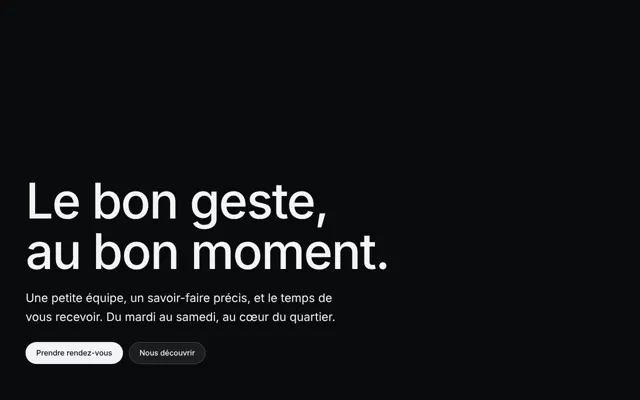 Hero · Centered
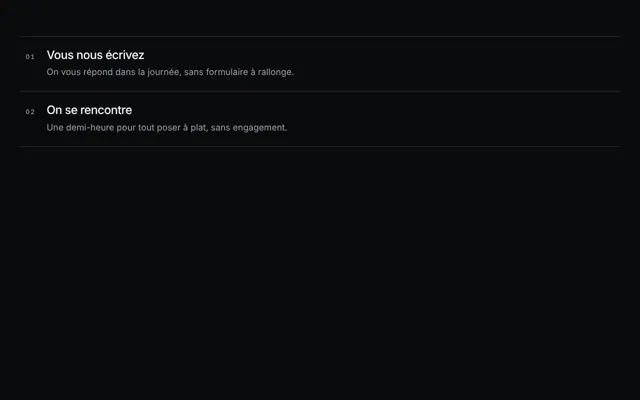 Numbered list
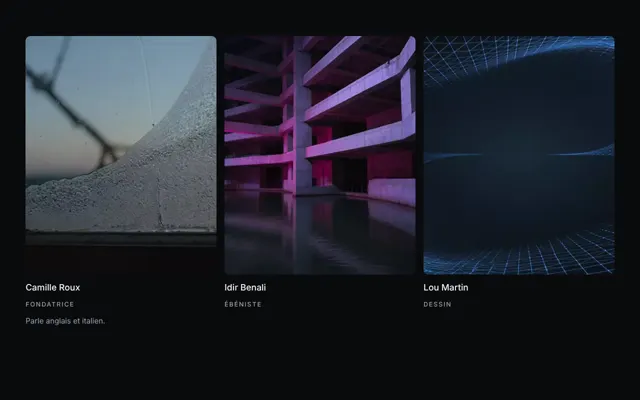 Team
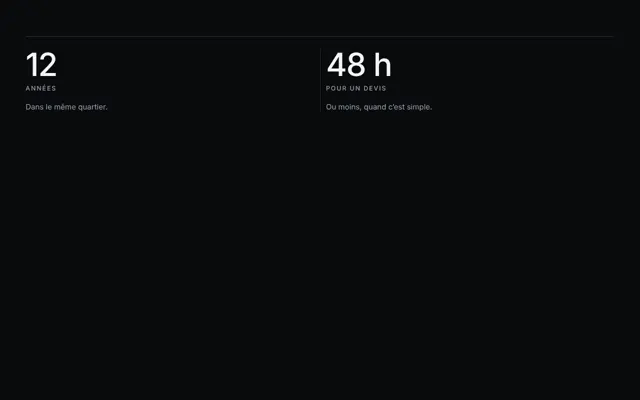 Numbers · Partitioned
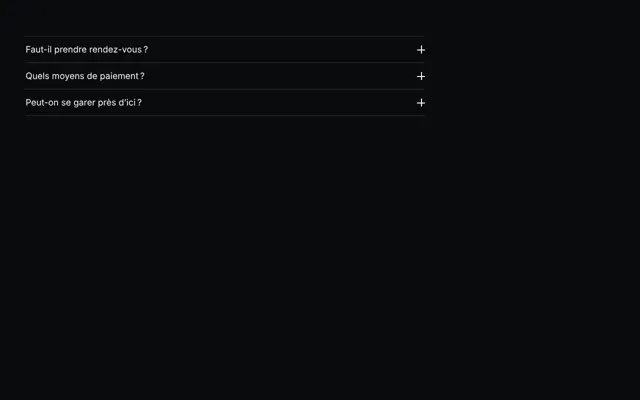 Accordion · Cards
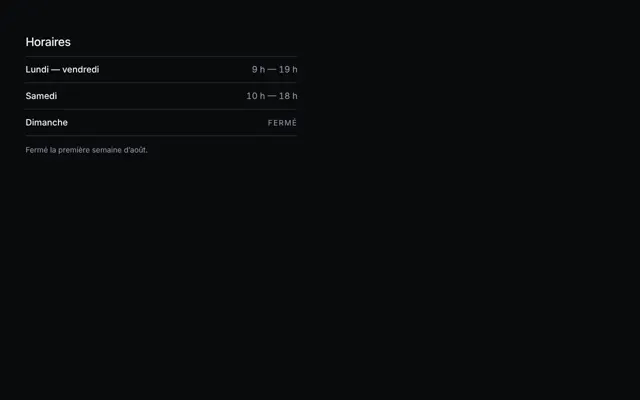 Opening hours
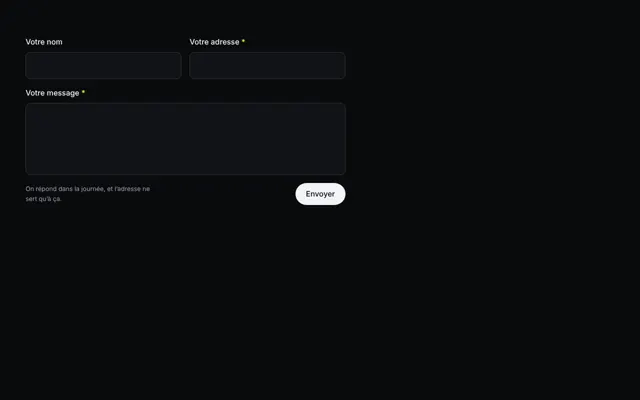 Form
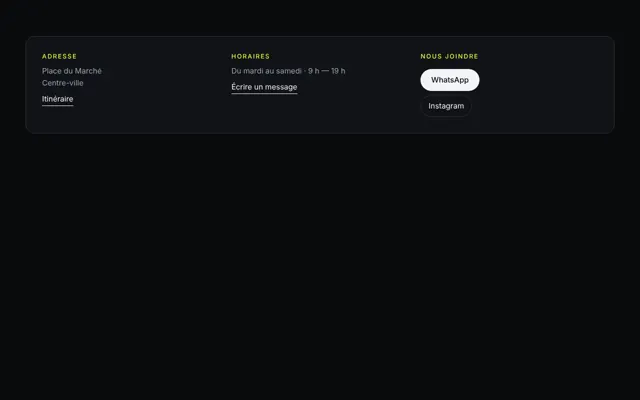 Contact · Panel
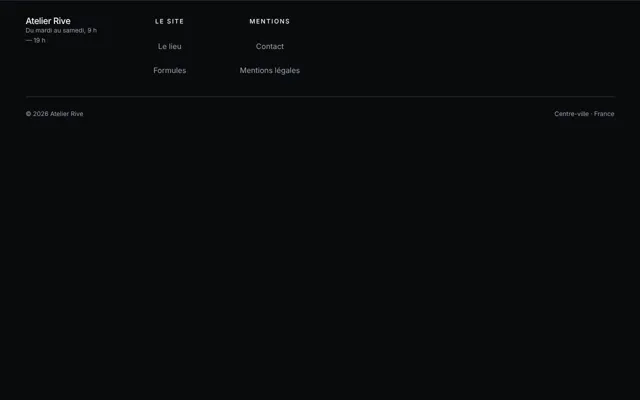 Footer
- The full bar stays opaque: the practice’s name and the appointment link read over any image.
- The centered hero sets your name, your specialty and a sentence. Its button leads to booking.
- The numbered list lists the procedures and treatments you perform, one per line, in the patient’s words.
- The partitioned figures hold facts the patient can check: the sector, the consultation fee, the opening days, the languages spoken.
- The accordion answers the questions that keep coming back: direct billing, documents to bring, the first session, wheelchair access.
- The asymmetric column sets a short title on the left and a paragraph on the right: what the patient does when the practice is closed, who to call and where to go.
- The panel contact stands out from the rest: the address, the hours and the phone as real links.
- The footer signs the page: your name, your RPPS number, the link to the legal notice.
The layout carries no testimonials: for a doctor, a dentist or a physiotherapist, professional ethics exclude them (see below). If you add sections in the studio, leave that one aside.
The background chosen is the still image: a single image, taken from a shot the studio films from your description. Nothing moves behind the text, and a patient who arrives tense has nothing to follow with their eyes. It is a created scene: describe a light or a material, because an invented waiting room would pass for yours. The Paper texture (see paper texture) lays the fiber of a thick paper over the page, like a document held in the hand.
What the rules say
Three decrees of December 22, 2020 rewrote, in the same terms, the rules on communication for doctors, dental surgeons and physiotherapists. You can present to the public, website included, your skills, your practices, your background and your conditions of practice, to help them choose their practitioner. This communication must be fair and honest, and it must not:
- rely on testimonials from third parties;
- rest on comparisons with other practitioners or facilities;
- push for unnecessary treatment or prevention;
- mislead the public.
The physicians’ code also keeps the ban on practicing medicine as a business, and the dentists’ code says the same of their profession.
The Orders spell out what this means on a website. The Order of Physicians asks you not to display ratings, evaluations, comments, thanks or testimonials from patients. It also excludes “before, after” photos that suggest a guaranteed result, comparisons of waiting times or fees, and any statement boasting of your results or the absence of complaints against you. The Order of Dental Surgeons counts patient testimonials and “before, after treatment” photos among information that tends to mislead.
Search ranking. It is forbidden to pay, or to use any other means, to appear first in search results. The Order of Physicians extends this rule to all internet use, down to hashtags used to gain visibility.
Fees. A doctor in private practice states their national health insurance sector, their usual fees (a range is enough), the payment methods accepted, and points out the direct billing owed to beneficiaries of the complementary solidarity health cover, state medical aid and to victims of a workplace accident or occupational disease. The dentists’ and physiotherapists’ codes require the same information on any site presenting the practice. For dentists, the Order recommends displaying at least the fees for the five to ten most common procedures.
Confidentiality. No patient may be recognizable in a photo or a video, even with their consent, the Order of Dental Surgeons specifies.
Updating. The Order of Physicians advises dating the health information published, citing its sources and removing what has become outdated.
The “Book an appointment” button
The studio doesn’t take appointments itself. The hero button and the bar button lead wherever you want: your online booking tool, your number, an email address. Keep a single destination, the same everywhere, and leave the number visible for patients who don’t book online.
Also check what your tool shows. The DGCCRF points out that a practitioner in private practice must state their national health insurance status there, and that no online booking fee may be charged to the patient. A quote is due as soon as fees above the standard rate reach €70 in total (DGCCRF, 2026): say so in the accordion.
Patient reviews
Your Business Profile will collect some. You can’t reuse them on your site: they would be third-party testimonials. Replying also calls for caution: the Order of Dental Surgeons cites, among possible breaches of confidentiality, replying to an identifiable patient’s review. A short, general reply that confirms nothing about the treatment remains the safest.
The mistakes that cost patients
- Missing fees, or fees “on request”: the rules require the information, and the patient will find it elsewhere.
- Patients’ thanks copied onto the page, even anonymous.
- A superlative: “the best-equipped practice”, “guaranteed painless treatment”.
- A diploma the Order doesn’t recognize presented as a specialty.
- A link to a brand of equipment or product, which dentists can’t promote.
- A page never reread: summer hours in November, a colleague who left two years ago.
Sources
- National Council of the French Order of Physicians, Article 19-1 of the code of ethics and recommendations on informing the public (2025)
- French National Order of Dental Surgeons, Code of ethics, articles R. 4127-215 to R. 4127-240 (2021)
- French National Order of Dental Surgeons, Recommendations on professional communication (amended 2026)
- French Official Journal, Decree no. 2020-1663 of December 22, 2020, physiotherapists’ code of ethics (copy from the Ain Order of Physiotherapists)
- DGCCRF, Billing by health professionals and facilities: what can you be charged? (2026)