
Whoever looks for a yoga class, a massage or a sophrology session often arrives tired, sometimes worried, occasionally ill. They want to know what happens during a session, what it costs, whether it is right for them, and how to book. They also read between the lines: a calm, precise site reassures them, a site that promises too much alarms them.
This audience is vulnerable, and the French state knows it: the DGCCRF regularly checks practitioners in the sector, and the Miviludes watches for abuses. An honest site therefore protects your clients, and protects you too.
What the client comes looking for
- What happens during a session: the sequence, the duration, what to wear, what it feels like.
- The prices: the session, the group class, the ten-class card.
- Who it is for: the level required, the contraindications, what the practice doesn’t replace.
- Who you are: your training, how long you have practiced, in exact words.
- Booking: the slots, the place, how to get there.
The “Wellness” layout
The studio offers it to yoga teachers, massage practitioners and therapists: a page where calm shows in the layout itself.
“Wellness” layoutBackground: Still imageTexture: PaperTexture: Light leak
 Floating pill
 Hero · Centered
 Statement
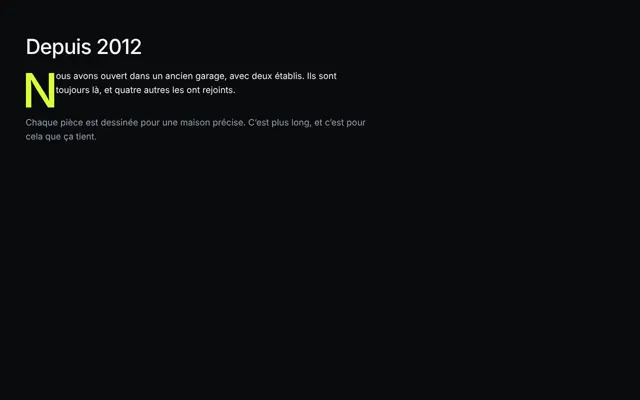 Text · Drop cap
 Numbered list
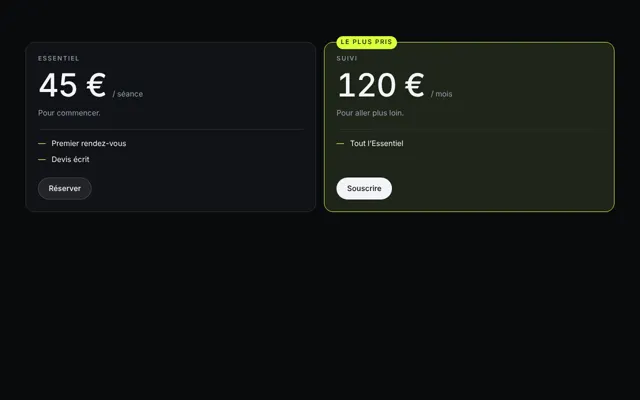 Pricing
 Opening hours
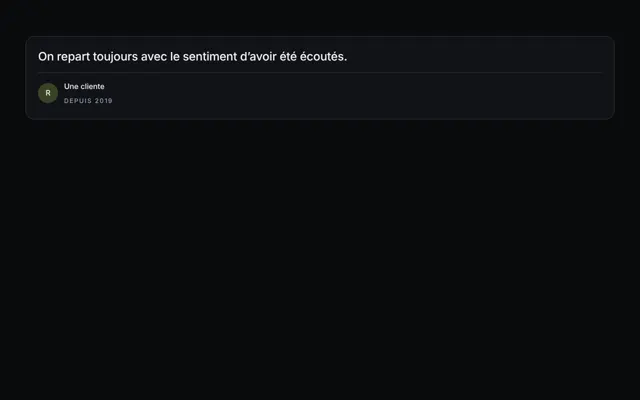 Testimonials · Frameless
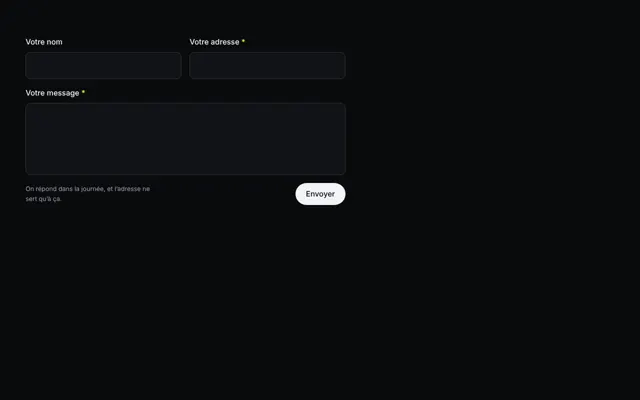 Form
 Contact
 Footer
- The pill navigation floats, detached from the edges, light over the image. It lets the first screen breathe.
- The centered hero sets your name, your practice and a sentence. Its button leads to booking.
- The statement says in one sentence what the session offers: time for yourself, a breath, a body you find again.
- The numbered list runs through a session, from the welcome to the return to calm, or presents your practices one by one.
- The accordion answers the questions that keep coming back: the first session, what to wear, cancellation, contraindications, medical follow-up.
- The prices set the rates side by side, in equal columns, with what each one includes.
- The frameless testimonials give the floor to real clients, without shutting them into cards.
- The contact brings together the address, the hours and the phone as real links.
- The footer signs the page: your name, the legal notice, the consumer mediator.
The background chosen is the still image: a single image, taken from a shot the studio films from your description, motionless behind the text. Nothing moves, nothing rushes. Two textures sit on it, the maximum the library allows. Paper gives the fiber of a thick paper (see paper texture). Light leak lets a warm flow in through a corner, as on a badly closed film: it warms the page, provided your palette is warm too (see the light leak effect).
What the rules say
Therapeutic claims. French consumer law treats as misleading any practice that falsely claims a service can cure an illness, a dysfunction or a malformation. In its 2018 investigation, the DGCCRF checked 675 practitioners (naturopaths, hypnotherapists, reflexologists, acupuncturists…): 68% had at least one breach. It found practitioners who said they took part in healing, relieved pain or treated serious illnesses, who borrowed the words consultation and patient from medicine, or who promised to stop smoking in one hour, without proof. So-called medical hypnosis is an act reserved for health professionals.
Confusion with care. A new investigation, run from October 2020 to September 2021 across some fifty disciplines, found an irregularity rate of 66%. The DGCCRF points there to borrowed medical codes: a logo recalling the caduceus, a practice nameplate, a listing in health professional directories. It also found websites claiming to cure cancer or depression, at the risk of turning patients away from their treatment.
Titles. Calling yourself “qualified”, “certified” or “approved” without a state diploma, official certification or approval is among the breaches found. The title of psychotherapist is regulated: it requires registration in the national register of psychotherapists, after validated training in clinical psychopathology (ARS Bretagne). After the 2018 investigation, fifteen possible cases of illegal practice of medicine or usurpation of title were sent to the public prosecutor.
The Miviludes’ vigilance. From 2022 to 2024, health and wellness were the leading field of reports and information requests handled by the interministerial mission against cult abuses: 37% of the total (Miviludes, 2025). A serious practitioner has every interest in writing in black and white what their practice doesn’t replace.
Informing the client. Prices are displayed, a receipt is due as soon as the service exceeds €25, and the consumer mediator’s contact details must appear on the site: the DGCCRF found these three points often neglected.
Writing the session, without promising a cure
Describe what you do and what the person experiences; leave aside the effects you can’t prove. “An hour of oil massage, in silence, in a warm room” can be checked and makes people want to come. “Boosts immunity” promises a health outcome.
A few reflexes:
- session rather than consultation, client or student rather than patient;
- one clear sentence, in the accordion: the practice accompanies, it replaces neither medical advice nor treatment;
- reviews that talk about the experience, and none that tells of a cure: published on your site, a testimonial becomes your promise. The article on customer reviews says what the law requires when you show them.
The “Book” button
The studio doesn’t take bookings itself. The hero button leads wherever you want: your online booking tool, your number, an email address. A single destination, the same everywhere.
The mistakes that cost clients
- “Relieves back pain”, “detoxifies”, “strengthens defenses”: health claims.
- A caduceus, a white coat, a medical-practice-style nameplate.
- “Certified practitioner” without saying by whom or under which standard.
- Prices “on request”.
- Stock photos: a perfect face on a massage table says nothing about your room.