
A brand launching a lamp, a sauce or a range in three colors has a few seconds to make people understand what the object is and why it deserves a look. The visitor often arrives from a social media post or an article. They are curious, and wary: they have seen many launches promise more than they delivered.
The page shows the object from every angle, proves what it claims, and says where to buy it, or from when.
What the customer comes looking for
- The object, for real: its size, its material, its colors, in faithful photos.
- What it does, and proof of what you claim.
- The price, tax included, and the release date if it isn’t available yet.
- Where to buy it: your own sales tool, the shops that stock it.
- What those who have tried it say.
- Who is behind it: the brand, the workshop or the factory, the country of manufacture.
The “Product brand” layout
This is the layout the studio offers for a product or a short range, when the launch is staged. Here it is from top to bottom:
“Product brand” layoutBackground: SequenceTexture: Halation
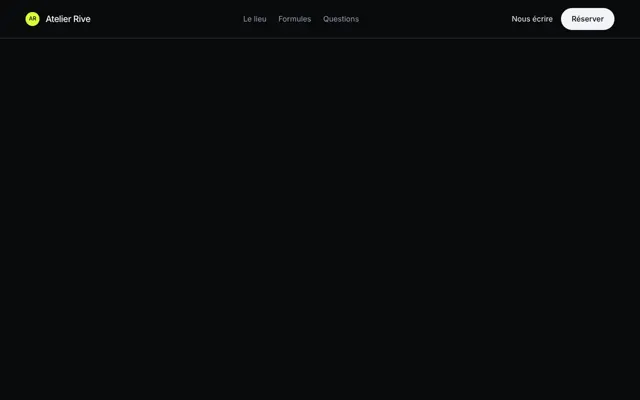 Minimal
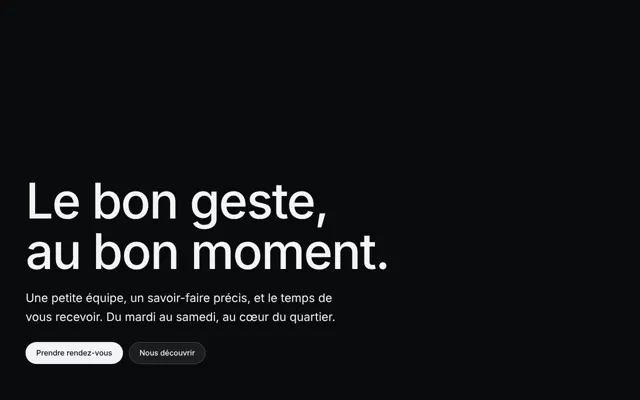 Hero · Centered
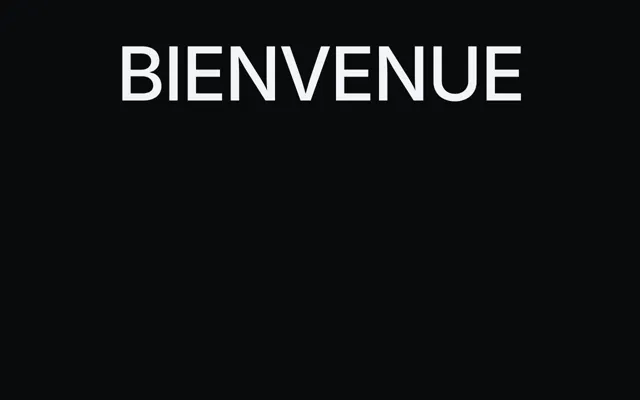 Overflow
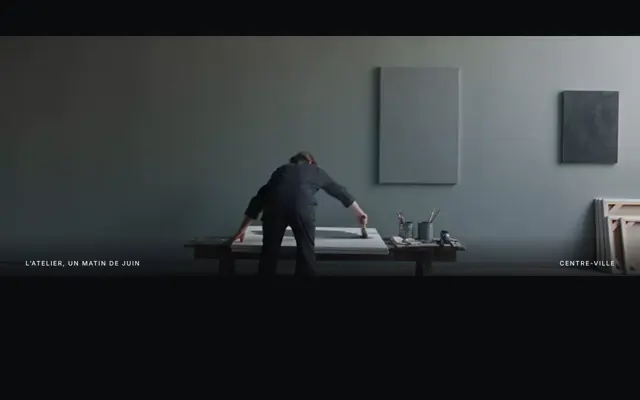 Full frame · Parallax
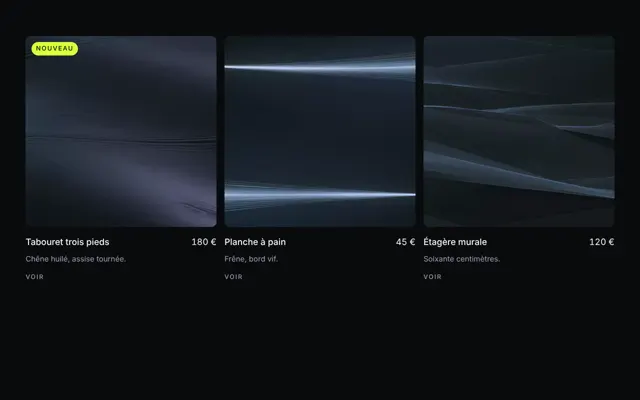 Products · Large images
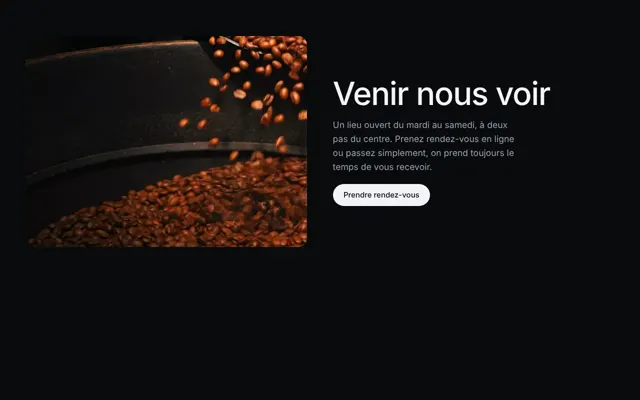 Split · Media on the right
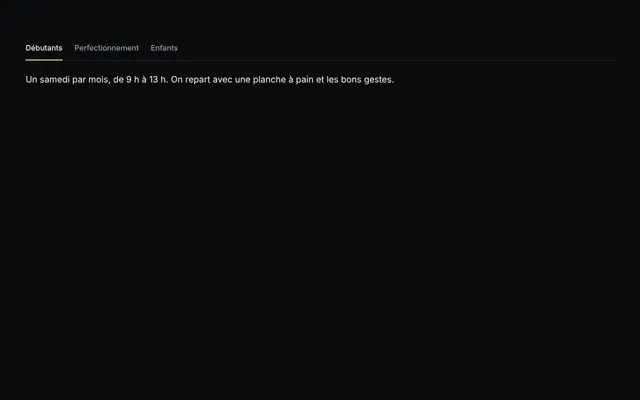 Tabs · Pills
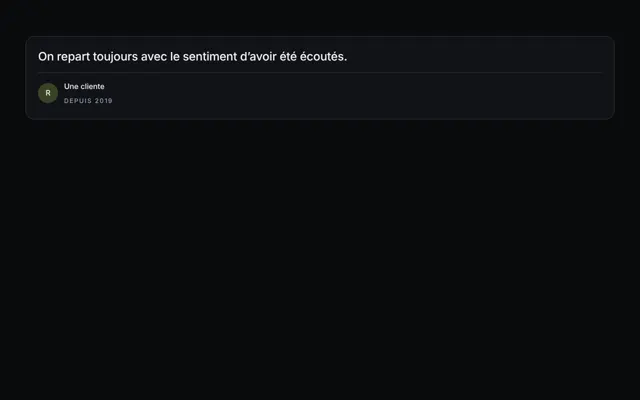 Testimonials · Strip
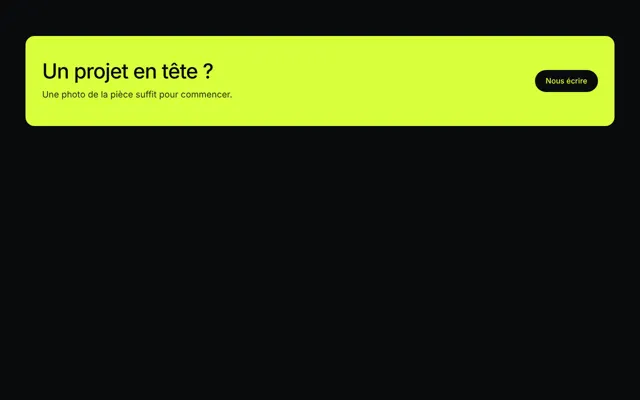 Call to action · Accented
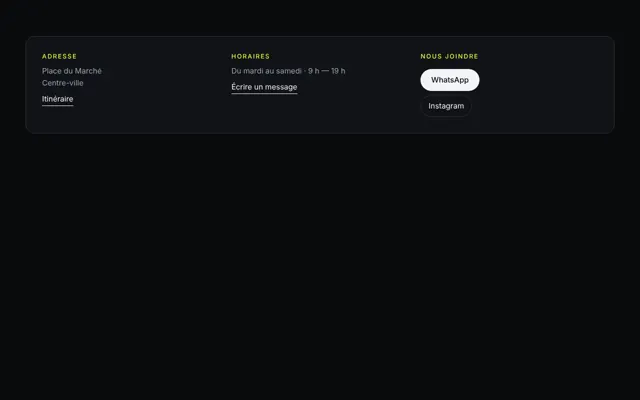 Contact
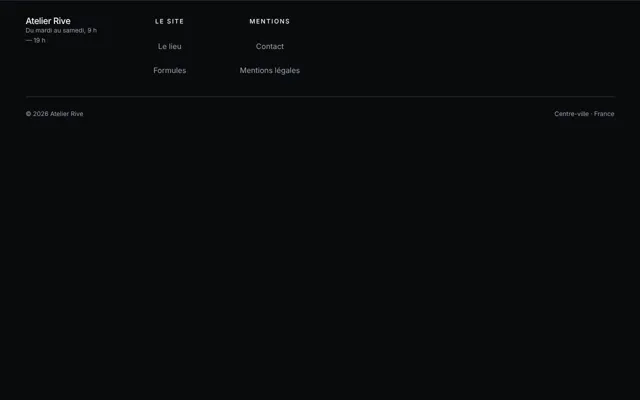 Footer · Giant signature
- The minimal navigation comes down to the brand and a menu button: the object keeps all the room.
- The centered hero sets the product’s name, a sentence and a button.
- The overflow shows a giant title, deliberately cut off by the frame: the name of the product or the range, as on a poster.
- The gallery lines up the object in a grid from its angles, in use, in detail.
- The split, media on the right, puts the photo on the right and the text on the left: what the product does, what it is made of, where it is made.
- The testimonials strip scrolls through several reviews, when there are many: a single one would read as the seller’s own claim.
- The prices present the sizes or variants in equal columns, with what is included and a button for each.
- The contact receives messages from the press, retailers, the curious.
- The giant signature footer writes the brand’s name, cut off by the bottom of the page.
The background chosen is the sequence: it changes scene as you scroll down, one scene per section. Each scene is a shot filmed from your description, and the price of the shoot shows before launching, like that of every action in the studio. Halation makes the light spill around its sources, as on film stock.
These scenes are created: they set up the product’s world. Nothing guarantees that a generation model faithfully reproduces your shape or your label; the object itself is shown in real photos, in the gallery and the split.
What the rules say: every claim must be proven
Everything the page claims about the product is a commercial practice under French consumer law. It is misleading if it deceives about its essential characteristics: composition, origin, method of manufacture, expected results, environmental impact. No customer needs to have been deceived: it is enough that the claim is likely to deceive. The penalty goes up to two years in prison and a €300,000 fine, and up to five years and €750,000 when the offense is committed online (DGCCRF, 2025).
What comes up in a launch:
- The environment. “Biodegradable” may no longer appear on a product or its packaging, under the French environmental code. A vague claim such as “eco-responsible” must be substantiated, and the DGCCRF has already refused mere supplier brochures as proof. The rule applies to your site as much as to the label (DGCCRF, 2023).
- Health. For a food or a drink, a nutrition or health claim is only allowed if it appears on the European Union lists; a health claim only enters them after assessment by EFSA, the European Food Safety Authority (DGCCRF, 2025). Falsely claiming that a product cures is misleading in all circumstances (DGCCRF, 2025).
- Origin. Suggesting a French origin a product doesn’t have is misleading, and “made in France” follows the origin rules of the Union Customs Code (DGCCRF, 2025).
- Scarcity. Falsely stating that a product will only be available for a very short time, to rush the decision, is among the practices that are misleading in all circumstances (DGCCRF, 2025). A countdown or a “limited stock” must be true.
- Reviews. Posting fake reviews, or editing customers’ reviews, is misleading in all circumstances (DGCCRF, 2025): see customer reviews on your site.
Write each promise with its proof beside it: the exact percentage, the test and its laboratory, the certificate and its date.
The waiting list, then the buy button
Before the release, the button serves to collect interested people. If you then write to them to announce the release, it is commercial prospecting: the CNIL requires their prior consent, through a checkbox that isn’t pre-ticked, and every message must make it simple to refuse the next ones. The existing-customer exception doesn’t apply here, since nobody has bought anything yet (CNIL, 2026).
The list lives in the mailing tool you already use: the button leads to its sign-up form. For the press and retailers, the contact block gives an email address that opens with a tap.
On release day, the button changes destination. It leads to your online shop if you already have one; otherwise, the “Products to order” block and the cart sell from the page itself (see “Selling online”). Aim for the product page, and put the same link in the hero, the prices and your social networks. The price shown is the one in your sales tool, in euros and tax included (DGCCRF, 2026).
The mistakes that spoil a launch
- A generated scene taken for the product: the background sets the world, the object is shown in photos.
- A promise without proof: “natural”, “sustainable”, “tested” without saying by whom or how.
- A fake countdown, or invented scarcity.
- A waiting list without clear consent.
- A buy button that leads to the home page of your sales tool instead of the product.
- A missing price on release day.
Sources
- DGCCRF, Misleading commercial practices: how to recognize them (2025)
- DGCCRF, We are very vigilant about the substantiation of environmental claims (2023)
- DGCCRF, Nutrition and health claims (2025, updated 2026)
- CNIL, Commercial prospecting by email, SMS-MMS and automated calling (2026)
- DGCCRF, Price information (2026)