
Whoever looks for an agency, for an identity, a campaign, a film or a website, arrives with a single question: have these people already pulled off something like my project? They compare several, and come back to your site the day before the meeting. They judge quickly, because your site is itself a piece of your portfolio.
What the client comes looking for
- Projects close to theirs: same sector, same size, same type of brief.
- What you solved: the starting problem, the creative stance, the result. A beautiful image without context is admired, but can’t be judged.
- How you work: the steps, the timelines, who does what, how many rounds of feedback.
- The people: the faces, the city, the size of the team.
- Proof: named clients, signed reviews, a few verifiable figures.
- A simple way to write, and what happens next.
The Nielsen Norman Group, which studies the usability of business websites, advises publishing varied case studies, especially when your clients come from different sectors, and notes that readers of a testimonial look at who wrote it: their job, their company. Participants in its studies also said that a real place and humans behind the service strengthen their trust (2019).
The “Agency” layout
This is the layout the studio offers design studios, creative workshops and firms, those whose way of working matters as much as the result. Here it is from top to bottom:
“Agency” layoutBackground: Scroll-scrubbed videoTexture: Grain
 Anchored
 Hero · Bottom left
 Manifesto
 Steps · Linked
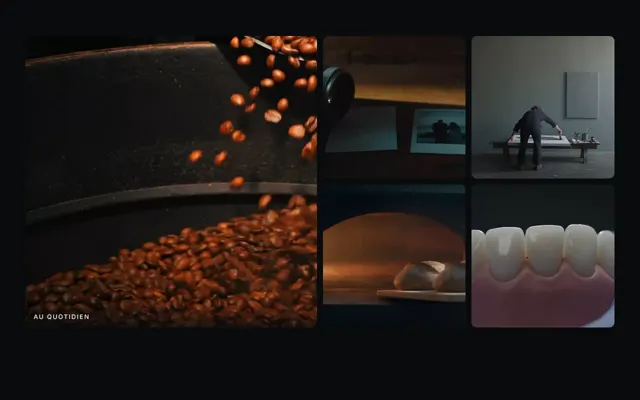 Gallery
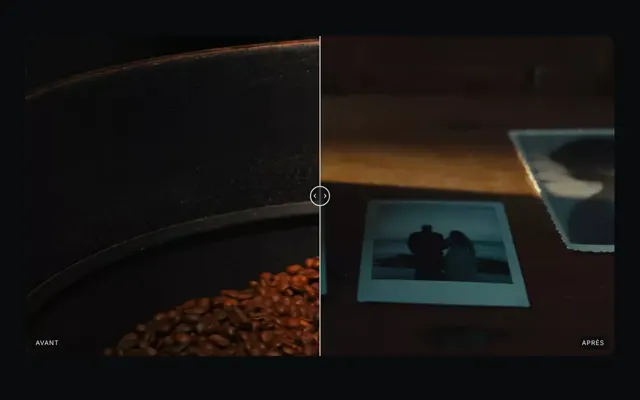 Before / after
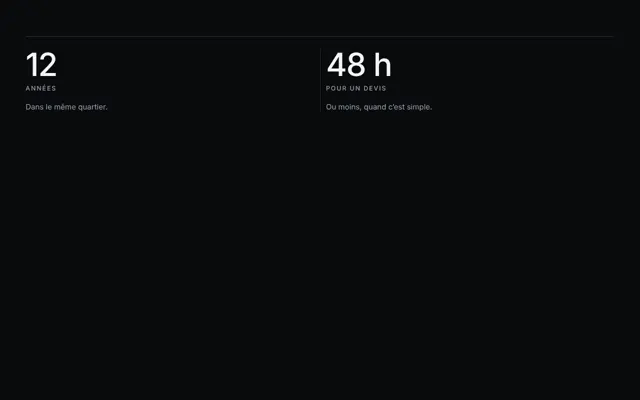 Numbers · Counted
 References · Between rules
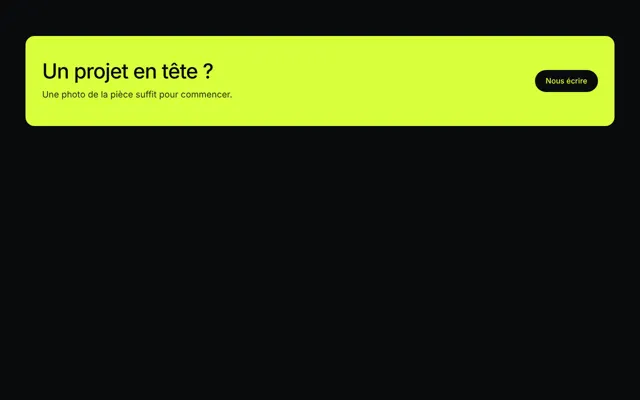 Call to action · Boxed
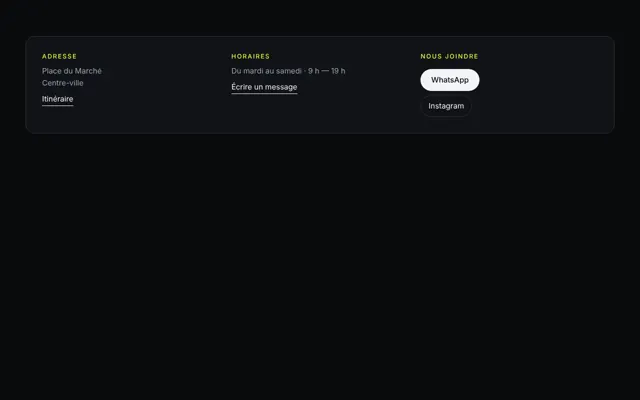 Contact · Panel
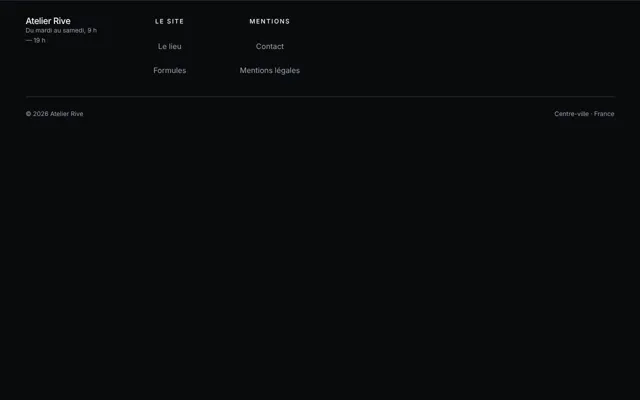 Footer · In columns
- The anchored navigation stays transparent on the first screen, then closes into a bar as you scroll: the video breathes, and the menu stays within reach.
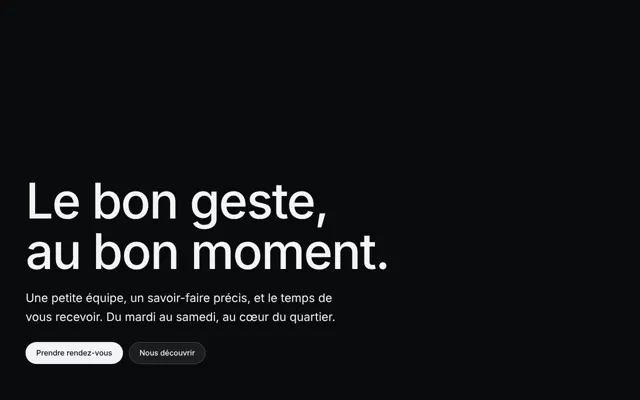
- The bottom-left hero sets the agency’s name and a sentence about what it does, in the corner where the film leaves room. Its button leads to the contact.
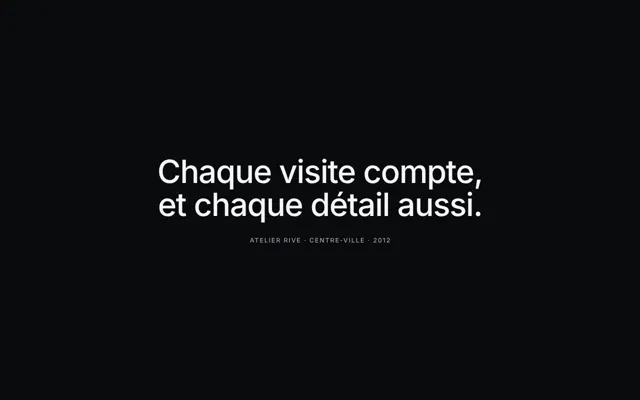
- The manifesto holds a sentence on screen and lights it up word by word as you scroll. It is the place for your stance: what you do better than others, what you refuse to do. There is only one per page, because it alone takes up more than two screen heights.
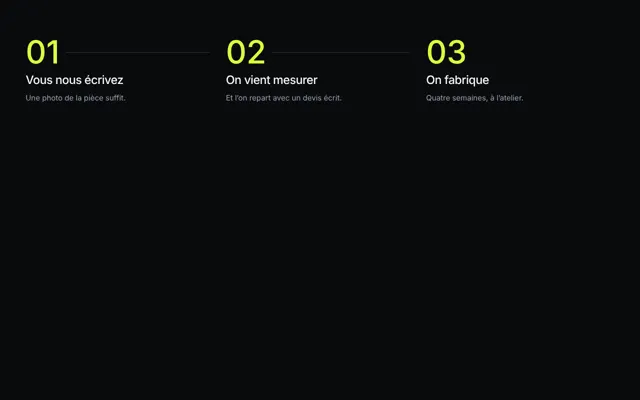
- The numbered list gives the method, from 01 to 05: listening, directions, choice, production, delivery. It answers “how do you work?”.
- The gallery arranges projects in a grid: one image per project, the client’s name, a line about the brief.
- The before / after shows two states of the same frame, separated by a handle you drag: the old logo and the new one, the old packaging and yours. The two views must have exactly the same framing, otherwise the comparison lies.
- The figures line up a few proofs: years in business, projects delivered, sectors served. Only numbers you can back up.
- The panel contact stands out from the rest of the page: email, phone, address, as real links.
- The columned footer holds what people look for last: social networks, legal notice, contact.
The background of this layout is the scroll-scrubbed video: the frames of the film advance with scrolling, in either direction, as if the visitor were unwinding the reel. It is the most spectacular of the backgrounds, and the heaviest: the film is cut into frames that load roughly first, then sharpen, and a small ring shows what is left to load. If the visitor has asked for less animation, the film fades out and its poster stays. This film is a scene created by a video generation model from your description: it sets up the agency’s world, your real projects stay in the gallery. The texture laid over it is grain, the fine noise of film stock, which disturbs the overly smooth flat areas of a generated image.
What the rules say: your projects have an author
In France, copyright arises from the creation itself, without registration or formality (INPI, 2024). An original logo, poster, film or illustration belongs first to the person who created it. A commission changes nothing: the Intellectual Property Code states that a contract for work or services does not override this right, subject to the exceptions it provides (article L111-1).
Your client therefore has only the rights you have assigned to them. This assignment is recorded in writing (article L131-2), and each right assigned is mentioned separately, with its scope, its purpose, its territory and its duration (article L131-3). Three consequences for your site:
- If you have assigned all reproduction rights to your client, you are no longer sole master of the image of their project. Have your contracts include the right to present it among your references: website, social networks, presentation deck.
- Your contractors remain authors of what they made: the illustrator, the photographer, the freelance editor. Their assignment to your agency also goes in writing, and their name deserves its place under the project. The author has the right to respect for their name (article L121-1), and the INPI points out that these moral rights cannot be assigned.
- A client’s name and logo commit them. Ask for their consent before lining them up among your references, and wait for a project’s launch before publishing it. A non-disclosure agreement signed at the start of the assignment also applies to your site.
The case study, in three steps
On a one-page site, each project is told briefly. Three steps are enough:
- The brief: who, what, and why now.
- The answer: the creative stance in one sentence, and the image that shows it.
- The result: what changed for the client, with a figure if they allow you to publish it.
Pair it with a signed review, with the name and job title of its author. The Nielsen Norman Group noticed that the most convincing testimonials start from a reservation before arriving at conviction, along the lines of “we were hesitant to redo everything, and…”. To collect and display them by the rules, see customer reviews on your site.
The mistakes that cost clients
- Visuals without context: people admire them, but don’t know what you solved.
- Old projects at the top of the gallery: the most recent first, and the rest can go.
- A client logo shown without their consent, or a project published before its release.
- Erased collaborators: the photographer whose image makes your gallery deserves their name.
- Images that are too heavy, exported at full resolution: see your site’s photos.
- A form with no follow-up: say how soon you reply.